A slower way to play

Make room
for the whole
game.

Rulebook Room is an informative tabletop games journal for hosts and players who want the table to feel clear, generous, and alive.

01place
02people
03play
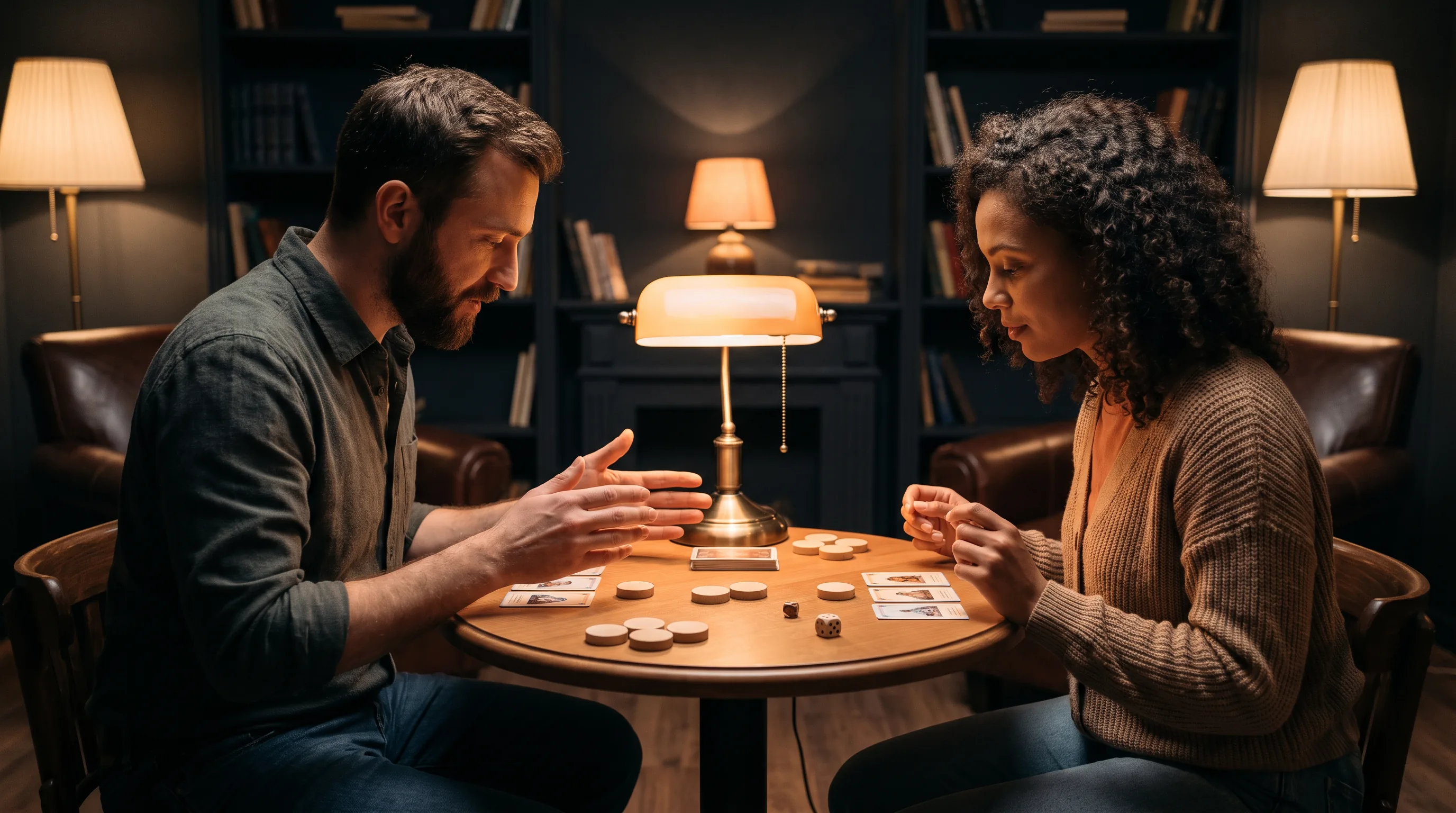
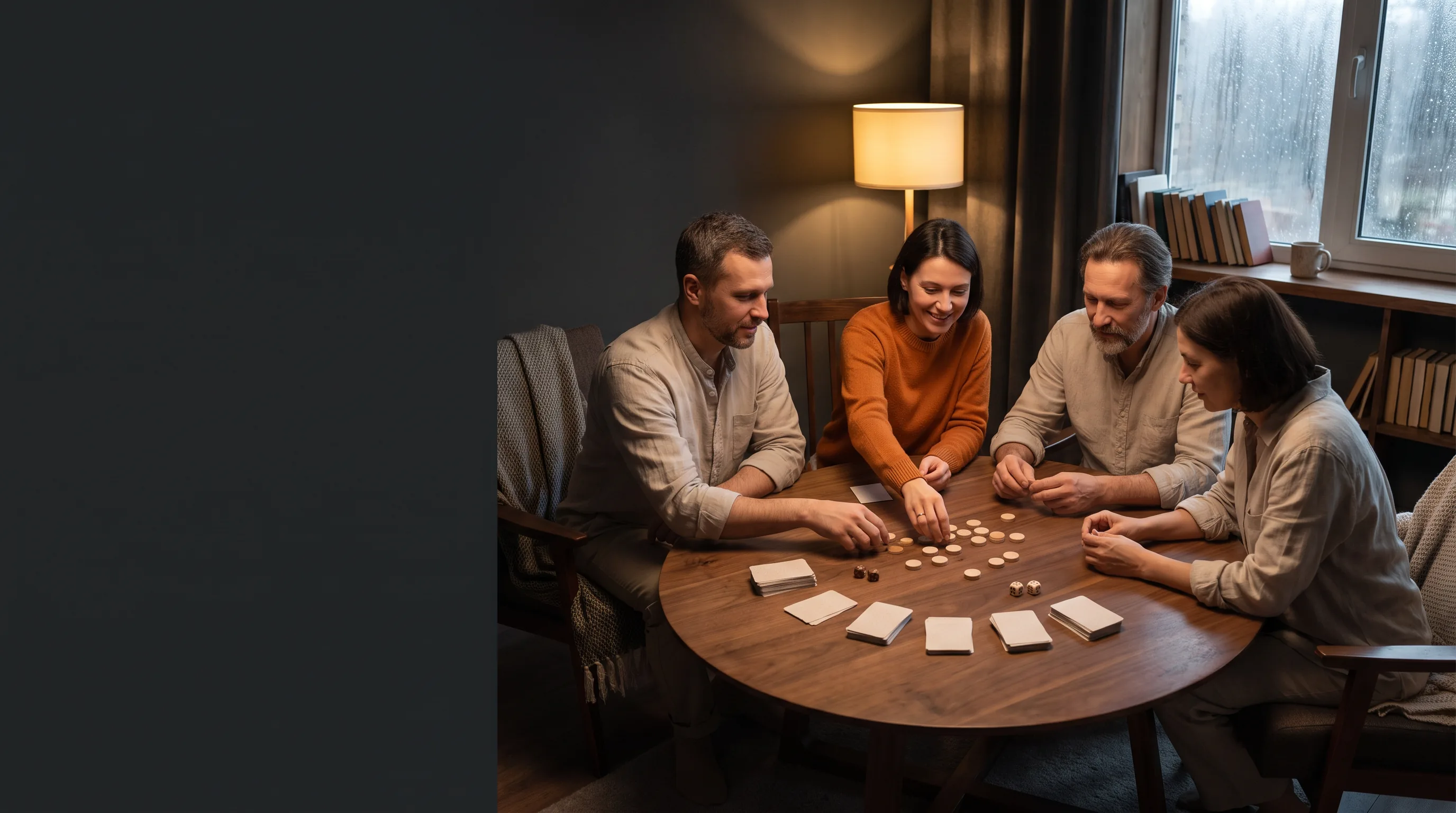
Four friends playing a tabletop game in a warm reading room
Tonight’s table / close, unhurried, shared

The room’s premise

Not every pause needs filling.

Games are systems, but game nights are social weather. We collect small, practical ways to notice the temperature of a table: who has enough context, what needs saying aloud, and when a little silence can do useful work.

Choose the clock

The right game length
changes the invitation.

Pick a window, then borrow a hosting posture. These are starting points, not rules.

02

Let curiosity have a chair.

When an evening has room to breathe, build an on-ramp. Put the first few choices in view, remind everyone that questions are part of play, and leave a little space between rules and decisions. The best middle length lets a group settle into its own tempo.

Two players thinking together at a small tabletop game

Table composition

Arrange for
participation,
not perfection.

A

Reach zone

Keep shared actions and reference pieces where no one has to interrupt the flow to ask.

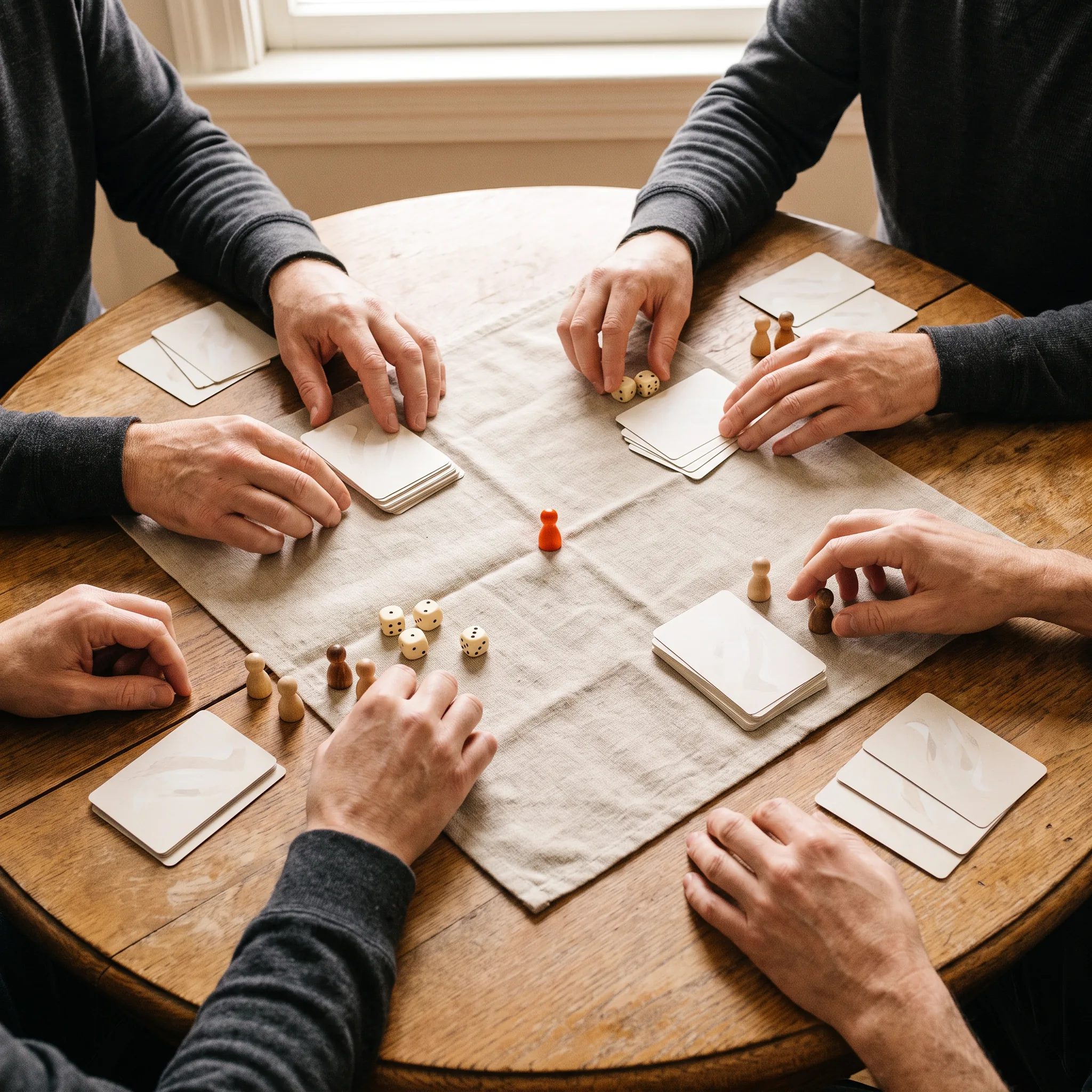
Overhead view of hands, cards, dice and pawns around a tabletop gameShared center
B

Quiet edges

Offer a place for a drink, a coat sleeve, a private hand of cards, or simply a resting wrist.

C

Readable path

Place the next decision near the player who will make it. The table can explain before you do.

Material intelligence

Cards, dice,
and the small
things between.

Components are not just information carriers. Their weight, reach, sound, and edges can tell a group when to lean in, wait, or hand something over.

Notice the pause
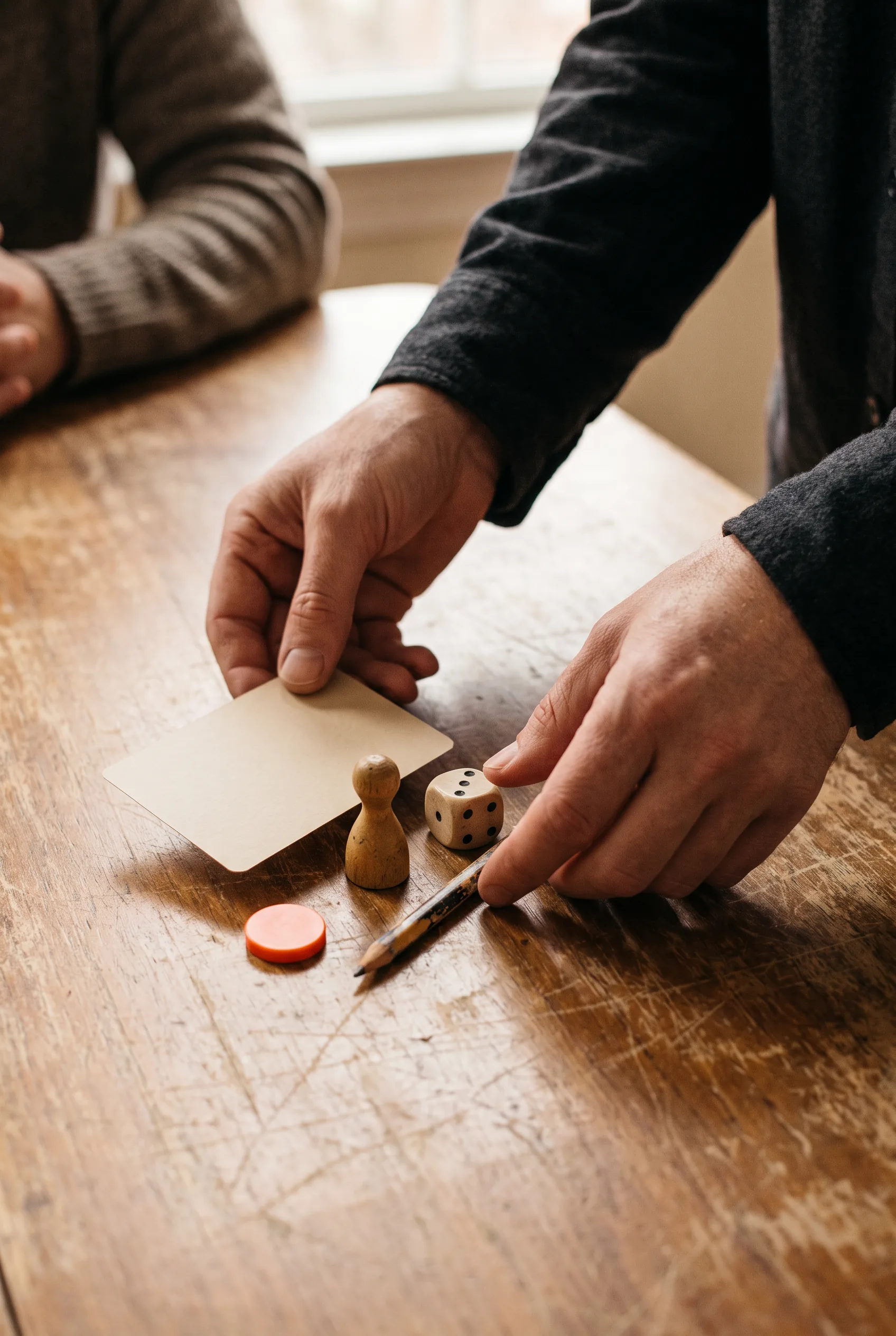
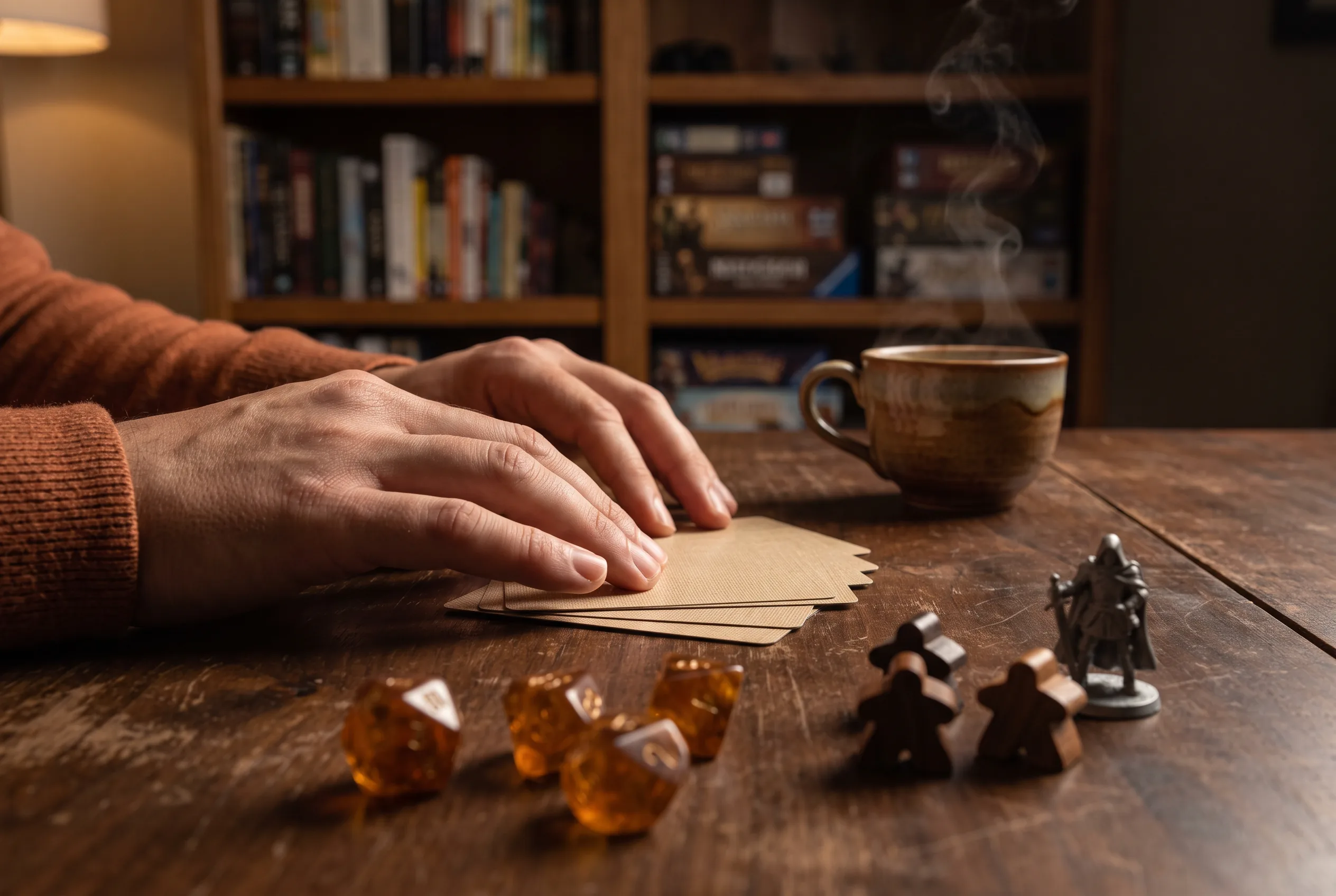
Hands pausing over cards, dice and wooden game pieces
Touch is a cue.
Keep the next choice tangible.

Decision pause notes

A held breath
is not a problem.

Note 01

Before advice

Try: “Would you like a reminder of the options, or a moment with it?” The question protects agency and tells the table that thinking time is normal.

Note 02

After a surprise

Say what changed in plain language, then let the player choose where to look next. Speeding to a solution can make an interesting moment disappear.

Note 03

When energy dips

Name the room, not the person: “Let’s take sixty seconds to reset the table.” A shared pause lands more softly than a private correction.

After-session review

Keep the useful
part of the night.

Table

What did we make easy to reach?

A physical observation: shared tokens moved freely once the center was cleared. Keep that layout sketch for next time.

Reflection

When did everyone lean in?

Remember the moment the group stopped narrating and began listening to each other’s choices. That is a clue, not a score.

Rules

Which rule arrived too early?

Move that explanation to the exact turn where it matters. Context is easier to hold when it comes with a decision.

Reflection

What can remain unfinished?

Not every insight needs a verdict. Leave one open question for the walk home or the next invitation.

Table

Where did the table become crowded?

Notice the pile that made someone wait, reach across, or lose their place. That pile is a design note for your setup.

Rules

What phrase made a rule human?

Save the short example that unlocked understanding. A good explanation often sounds like one player inviting another in.

Showing all six room notes.

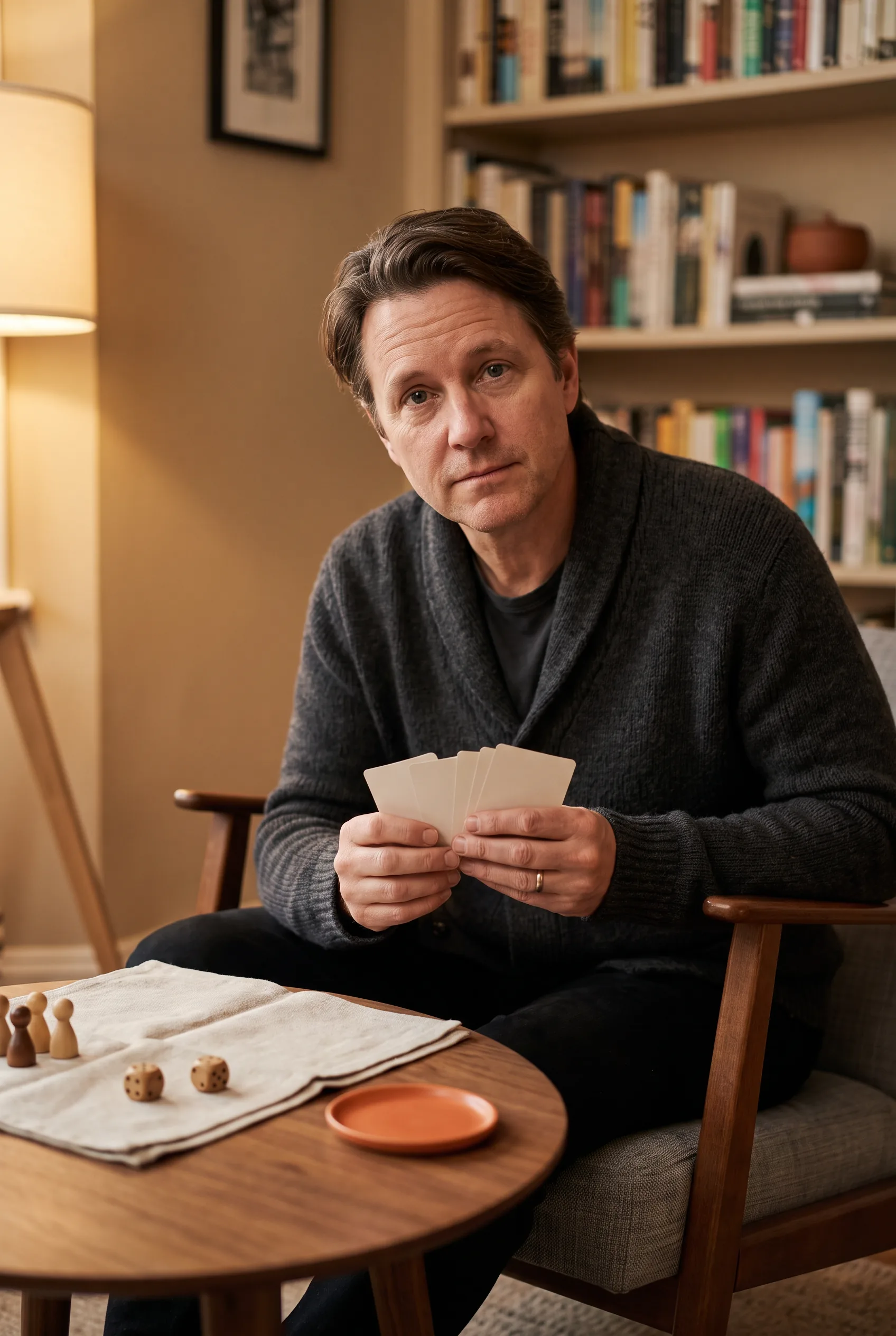
A tabletop game host holding cards in a home libraryHost’s shelf / one question at a time

Host’s question deck

Prompts that make
more room at the table.

Table reset checklist

Leave the room
ready to return.

Small endings make future invitations easier. This list lives in your browser on this device only.

0 of 6 settled

A room is a rulebook, too

Light low.
Chair close.
Rules shared.

Play becomes easier to enter when the room makes its welcome visible.

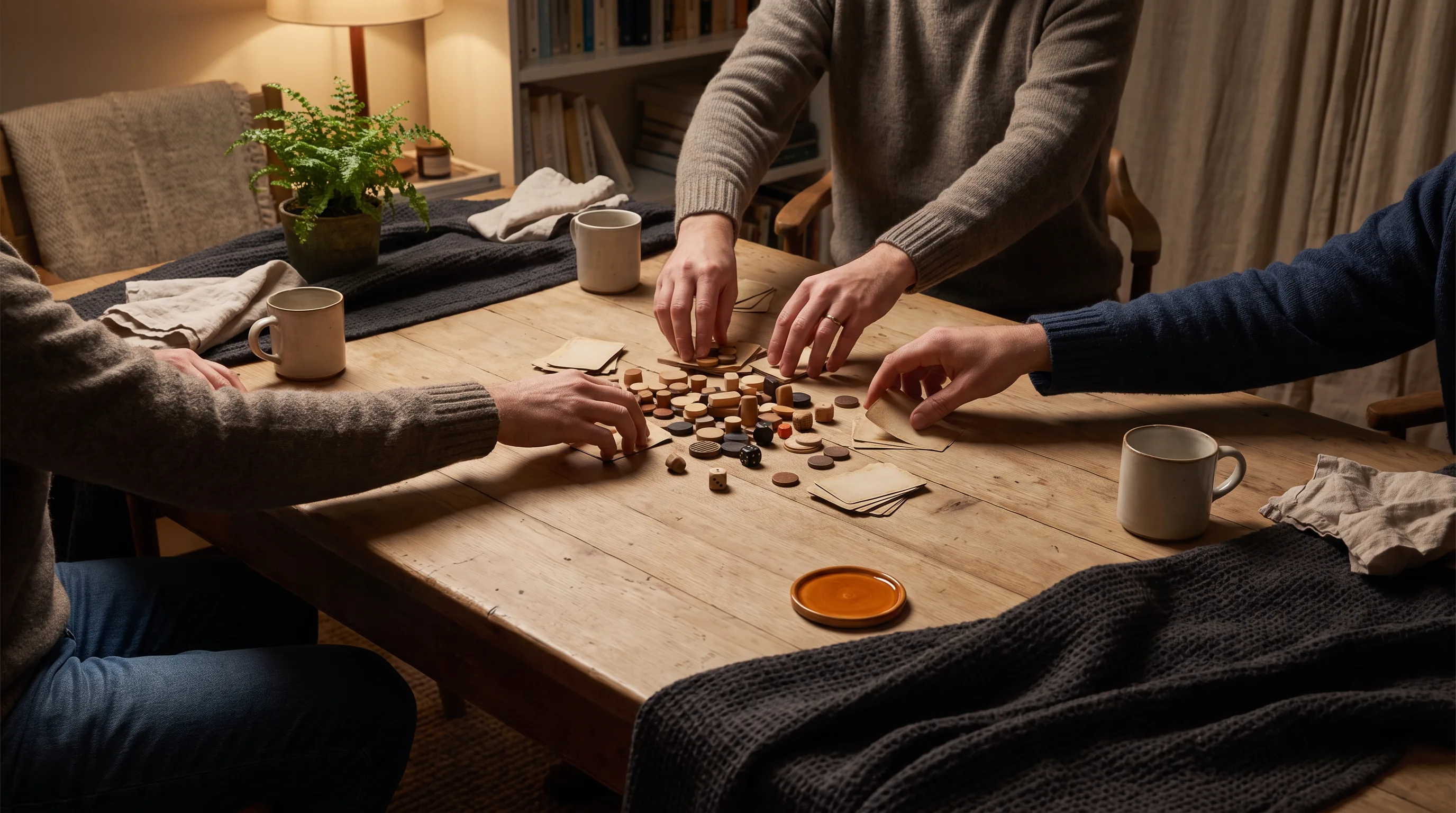
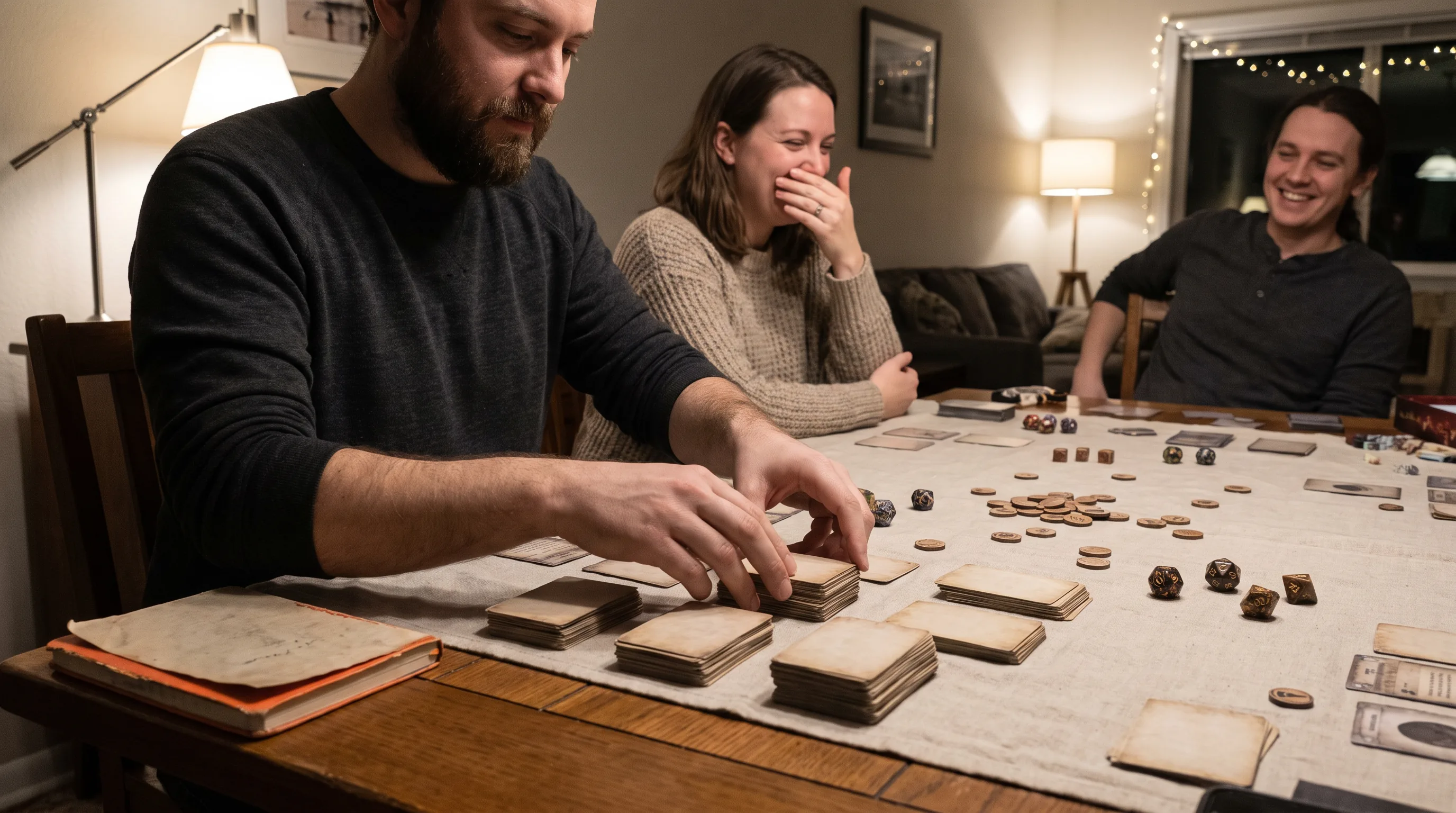
Friends enjoying a relaxed tabletop game at a dining table

Frequently asked questions

A few things
we’re asked.

No. The room is for anyone who enjoys gathering around a game, whether you host often, are learning how games work, or simply want a more comfortable way to join in. We focus on practical signals that make play easier to enter: clear invitations, reachable pieces, gentle explanations, and room to ask a question.

Most of the ideas travel well across cards, dice, maps, cooperative games, party games, and heavier strategy games because they concern the human table around the rules. A short card game and a long campaign will need different pacing, but both benefit from a visible next step, shared context, and an ending that does not feel abrupt.

Not at all. A kitchen table, a coffee table, or a borrowed corner can work beautifully. The point is not elaborate equipment; it is making the table legible and considerate. A clear reach zone, enough light to see the current choice, a place to set a drink, and permission to pause will often matter more than a dedicated space.

Use one or two prompts after the game, not all of them at once. They are conversation starters rather than a review rubric, so there is nothing to complete or measure. Pick the question that feels closest to the evening, share an observation if you have one, and leave the rest for another session when the memory can be useful again.

Write to the room

Leave a
thoughtful note.

Have a question about a table habit or a reading-room topic? Start a message here, or write directly to [email protected].